6 Lessons on Staying Mentally and Physically Active in Retirement
Retirement is often framed as a finish line—a long-awaited pause after decades of productivity. But in reality, retirement is one of life’s most significant transitions. When approached intentionally, it can become a deeply fulfilling chapter marked by vitality, clarity, and renewed purpose.
Staying mentally and physically active in retirement isn’t about staying busy. It’s about staying engaged—with your body, your mind, and your sense of meaning. The following six lessons offer a holistic framework for aging actively and gracefully, honoring both well-being and personal evolution.
Lesson 1: Redefine Purpose Beyond Productivity
One of the most common challenges retirees face is the sudden absence of structure and identity once tied to a career. Purpose does not disappear in retirement—but it does evolve.
Instead of productivity-based purpose, this stage of life invites contribution-based purpose. That contribution may come through mentorship, volunteering, creative pursuits, or simply showing up fully in relationships.
Purpose is less about what you do and more about how you engage with life. When retirees reconnect with what feels meaningful to them personally, mental vitality naturally follows.
Lesson 2: Prioritize Gentle, Consistent Movement
Physical activity in retirement doesn’t need to be intense to be effective. In fact, consistency matters far more than intensity.
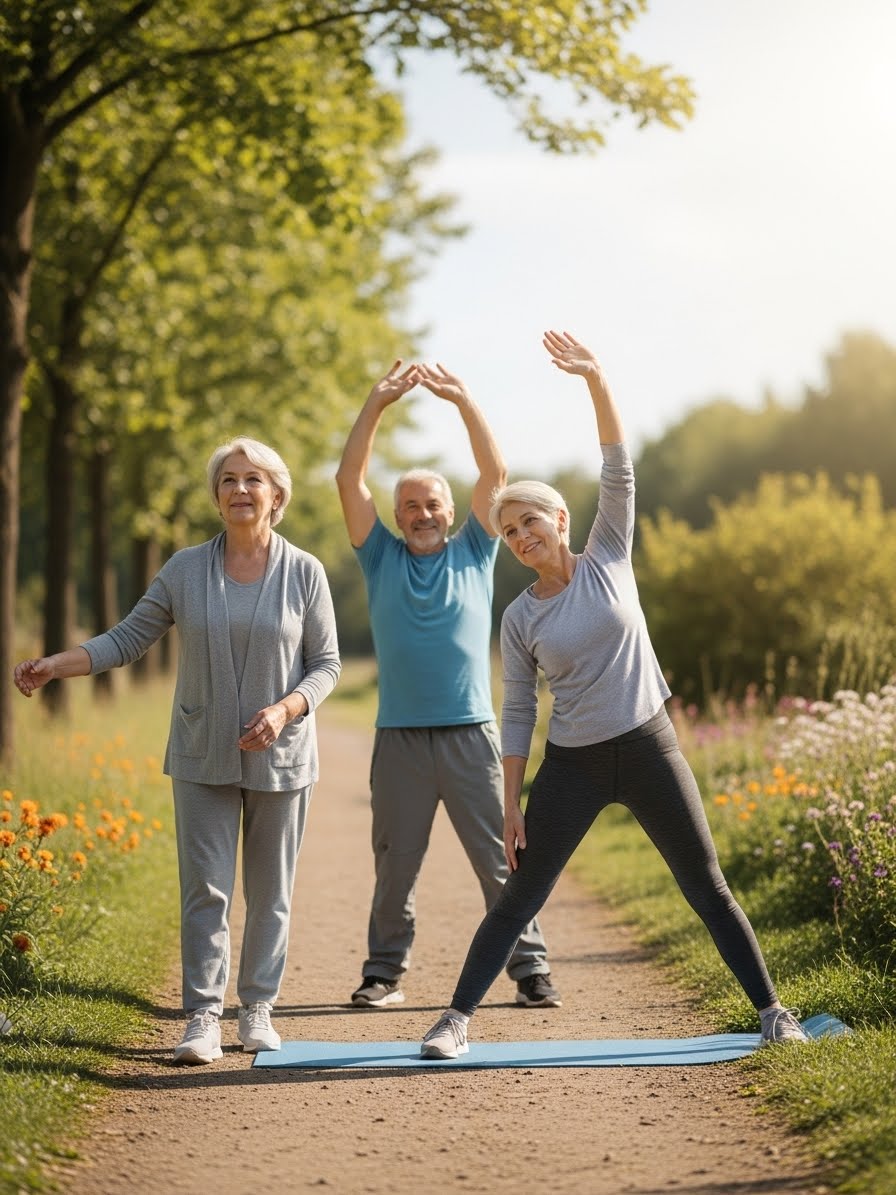
Practices such as walking, stretching, yoga, swimming, or dance support mobility, circulation, balance, and emotional well-being. These forms of movement also regulate the nervous system, reducing stress and supporting cognitive health.
Movement should feel nourishing, not punishing. When retirees choose activities they genuinely enjoy, physical activity becomes a lifestyle rather than a chore.
Lesson 3: Stay Socially Connected to Protect Cognitive Health
Social connection plays a critical role in mental and emotional health during retirement. Research consistently shows that isolation increases the risk of cognitive decline, depression, and physical illness.
Meaningful connection doesn’t require a packed social calendar. It can be as simple as:
Regular check-ins with friends or family
Group classes or community activities
Shared hobbies or interest groups
Human connection stimulates the brain, supports emotional resilience, and fosters a sense of belonging—an essential ingredient for healthy aging.
Lesson 4: Embrace Lifelong Learning and Curiosity
The brain thrives on novelty. Retirement offers a unique opportunity to explore interests that may have been set aside during working years.
Learning a new language, taking a class, reading widely, or developing a creative skill helps keep the mind agile. Curiosity stimulates neural pathways, enhances memory, and fosters a sense of excitement about life.
Lifelong learning isn’t about mastery—it’s about engagement. When retirees remain curious, they remain mentally alive.
Lesson 5: Honor Emotional and Spiritual Well-Being
Retirement often brings unexpected emotional shifts. Alongside freedom and relief, individuals may experience grief, loss of identity, or unresolved emotions that were previously masked by busyness.
Addressing emotional and spiritual health is just as important as physical activity. Practices such as meditation, journaling, reflection, therapy, or spiritual exploration can help retirees process transitions with compassion and clarity.
Emotional well-being supports mental resilience. When inner life is tended to, outer life feels more grounded and fulfilling.
Lesson 6: Align Daily Life With Personal Values
Perhaps the most powerful lesson of active retirement is alignment.
This phase of life offers the freedom to design daily routines around personal values rather than external demands. Whether those values include simplicity, connection, creativity, service, or spiritual growth, alignment creates energy.
When retirees live in accordance with what truly matters to them, motivation arises naturally. Mental clarity improves. Physical vitality follows.
Alignment is the foundation of sustainable well-being.
Retirement as a Conscious Transition, Not a Decline
Staying mentally and physically active in retirement is not about resisting aging—it’s about embracing it consciously.
This chapter invites reflection, embodiment, and intentional living. When retirees engage with purpose, movement, connection, curiosity, emotional health, and values, retirement becomes not a slowing down—but a deepening.
Active retirement is not measured by how much you do, but by how fully you live.
